Church and Nonprofit Aid Immigrants, Refugees in Southern Missouri
“To provide these services in the name of Jesus is the most incredible opportunity the American church has had,” says Hennessy who with Marie, his wife of 44 years, served 13 years in Nigeria and South Africa before working in internet evangelism with Network 211, then becoming vice president of academics at Trinity Bible College. The Hennessys took the helm of Life360 All Nations church nearly three years ago.
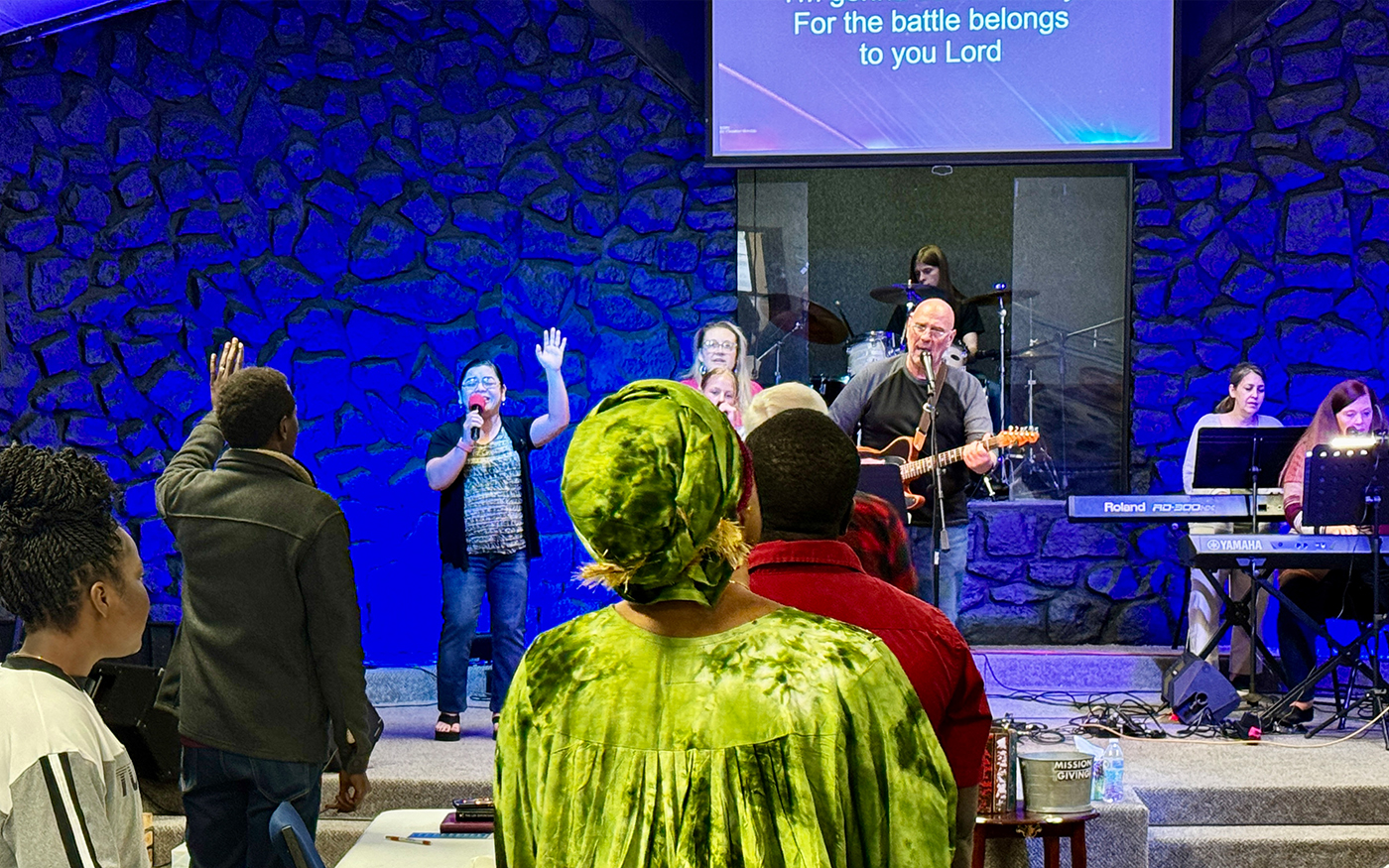
Located in one of the more impoverished areas of Springfield where most recent immigrants live, the church meets on Saturday nights around tables in a sanctuary to enjoy worship, a message, and a shared dinner. The congregation includes Venezuelans, Syrians, Jordanians, people from Myanmar, and some from Africa, among others. A number are under temporary protective status, meaning they are refugees.
To unite them, All Nations “gathers around the identity of Jesus, to be the tribe of Judah, if you will,” Hennessy says. “We become a single people but retain our uniqueness. We celebrate each others’ cultures and learn from each others’ differences.”
As a result, people “tell everybody they know [about the All Nations community]. It’s literally, ‘Come and see,’” he says.
The strategy of the church and of the separate All Nations Welcome Center, a nonprofit refugee and international services center housed in the same building and headed by Hennessy, is to offer assistance no one else is providing and connect immigrants to other available services.
Springfield and other mid-sized cities are attractive to immigrants because of their lower cost of living relative to larger metropolises. But most immigrants, refugees especially, arrive speaking no English and are unsure how to navigate normal features of American society such as overwhelmingly large grocery stores, and critical legal, medical, and educational services. All Nations gives them food and household items from the nonprofit’s well-stocked warehouse, teaches them English, aids them in learning to shop, accompanies them to doctors’ visits, and helps them navigate visa processes.
The goal is to work with other community organizations so not to duplicate services.
“Where there is nothing being done, that’s our niche,” Hennessy says.
In recent months, previously available government and nonprofit assistance has decreased due to policy adjustments, causing some nonprofits to lose funding or scale back services. All Nations has remained active thanks to generous donors and has stepped in to fill some of those gaps.
“It’s vital to have a spiritually-based organization at the table to bring together organizations and agencies to serve the immigrant families that are legally here,” says Steve Donaldson, All Nations board member and founder of Rural Compassion.
Donaldson calls All Nations Welcome Center “a catalyst and a model of how this can be done. Dr. Bill Hennessy is amazing at working with other community leaders to make a difference for people from all around the world.”
Still, immigrants face plentiful headwinds.
In recent years, immigration policy has received heightened attention, creating a more complex environment for those coming to the country. At All Nations, the largest single ethnicity is Venezuelan, and many have arrived seeking stability after economic hardship, war, and shortages in their home country. However, headlines related to crime from that region have a tendency to create concern among Venezuelans about being misunderstood.
“Part of our job was speaking peace over their lives,” says Hennessy.
The church and nonprofit take people from isolation to acclimation to enculturation, where they feel they belong. For some, such as those from South America, the process can happen speedily; for others, such as those from Africa, the Middle East, and Southeast Asia, it often takes longer.
For most immigrants, the biggest struggle is not material but a sense of being invisible to those around them.
“The predominant culture in Springfield doesn’t realize these folks are now living amongst us,” says Hennessy. As a result, immigrants can “feel transparent, unseen, like no one values them. It’s very frustrating to them. They are tax-paying, productive people, adding to our culture, not taking away. They have lives and backgrounds. They have accomplished things in their home countries, and because of war or an ethnic or economic issue, suddenly they are not welcome there.”
All Nations’ number one tool is presence, says Hennessy.
“We’re going to be with them,” he says. “They know they have a friend with us. If they have a problem, we’re not going to run away. We are going to help them find a solution. They are mindful of God putting us together, and we have earned the right to speak into their lives.”